July, 2026
Coastal Towers and Exceptional Waterfront Living in Saudi Arabia's Eastern Province
Saudi Arabia's luxury real estate narrative has, for years, belonged to two cities. Riyadh tells the story of ...
Explore moreLocations
Latest stories
July, 2026
Saudi Arabia's luxury real estate narrative has, for years, belonged to two cities. Riyadh tells the story of ...
Explore moreJuly, 2026
Saudi Arabia's Council of Ministers has approved the executive regulations governing non-Saudi real estate own...
Explore moreJuly, 2026
Across the global property market, the priorities of buyers and investors are shifting. There is a growing int...
Explore morePublished: 10 April 2026
At the heart of the Saudi capital, Riyadh, one of the world's most ambitious urban projects is taking shape: King Salman Park. Far more than a public green space, it represents a comprehensive vision for profound environmental and urban transformation in one of the world's fastest-growing cities, and is part of a broader commitment to improving quality of life and advancing sustainability.
From the outset, it has been clear that the objective extends well beyond creating a green area. The project aims to fundamentally reshape the relationship between people and their city, positioning Riyadh as a global model for balancing urban development with environmental responsibility.
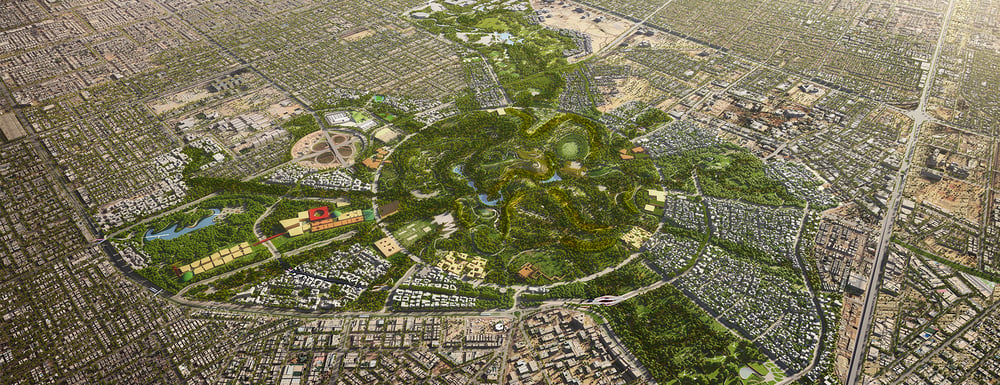
King Salman Park was announced in 2019 as one of Riyadh's most significant large-scale developments. Built on the site of the former airport, its strategic location connects disparate parts of the city, giving it a pivotal role in redistributing urban activity and establishing a new civic centre for the capital.
The project's concept centres on creating an integrated environment that brings together nature, leisure, culture, and services within a single, expansive site. The scope of the park reflects a broader shift in urban planning philosophy, away from hard infrastructure and towards quality of life and open public space.
The figures alone convey the exceptional scale of King Salman Park:
These figures make it the largest urban park in the world, both in area and in the breadth and integration of its uses.
More significant than the numbers, however, is what they represent: the conversion of a vast city-centre site into a thriving green environment, rather than a dense, inward-facing urban block.
Although classified as an urban park, King Salman Park's components far exceed the conventional definition. It is, in effect, a city within a city, encompassing elements that serve a wide range of lifestyles.
Cultural facilities include the Royal Arts and Museums Complex, alongside theatres and event spaces. Sports and recreational areas feature walking and running trails, a range of sporting facilities, and open spaces for family activities.
The project also incorporates natural features such as a central wadi and lakes that add both environmental and aesthetic value whilst improving the local microclimate. Residential, hotel, and commercial units complete the offer, creating a fully integrated urban environment in which people can live, work, and socialise within a single precinct, significantly reducing the need for long cross-city commutes.
If the project's scale is striking, its environmental impact is the element of greatest long-term significance, particularly for a city with a desert climate such as Riyadh.
Planting approximately one million trees represents a fundamental change to the urban environment. This density of vegetation will improve air quality by absorbing pollutants, reduce airborne dust, and deliver a measurable reduction in temperatures. In a desert city, green cover of this scale is a critical factor in improving the daily climatic conditions experienced by residents.
Modern cities frequently suffer from the urban heat island effect, whereby dense concentrations of buildings and asphalt drive up local temperatures. King Salman Park addresses this directly by expanding green space, introducing water features, and reducing hard surfaces that create a more temperate environment, particularly during summer months.
In a region where water resources are limited, the project employs advanced water management techniques, including treated water recycling, smart irrigation systems to minimise waste, and the selection of plant species suited to the local climate. This approach ensures long-term sustainability without placing undue pressure on existing resources.
The project reintroduces natural elements into the urban fabric through a bird and butterfly reserve, diverse planting schemes, and the creation of varied natural habitats — enhancing ecological balance within Riyadh and making the city a more vibrant living environment.
The influence of King Salman Park extends to how residents live. Open spaces, dedicated walking routes, and sporting facilities actively encourage physical activity and healthier lifestyles. The park also provides venues for social gathering and community interaction, both of which are valuable benefits in large cities where the pressures of daily life can erode social cohesion and mental wellbeing.
Integration with the city's public transport network, including the Riyadh Metro and key bus stations, further reduces dependence on private vehicles and supports the broader goal of sustainable mobility.
At its core, King Salman Park represents a new paradigm for the modern Arab city that moves away from rapid urban expansion towards balanced urban environments where people and the natural world are at the centre of planning decisions.
The project is one of the most significant urban developments in the world today, combining genuine scale with measurable impact: extensive green space, tangible environmental improvements, and a more balanced way of urban life. It will, in all likelihood, fundamentally alter Riyadh's character towards a city that is greener, healthier, and more sustainable.