Published: 10 January 2025
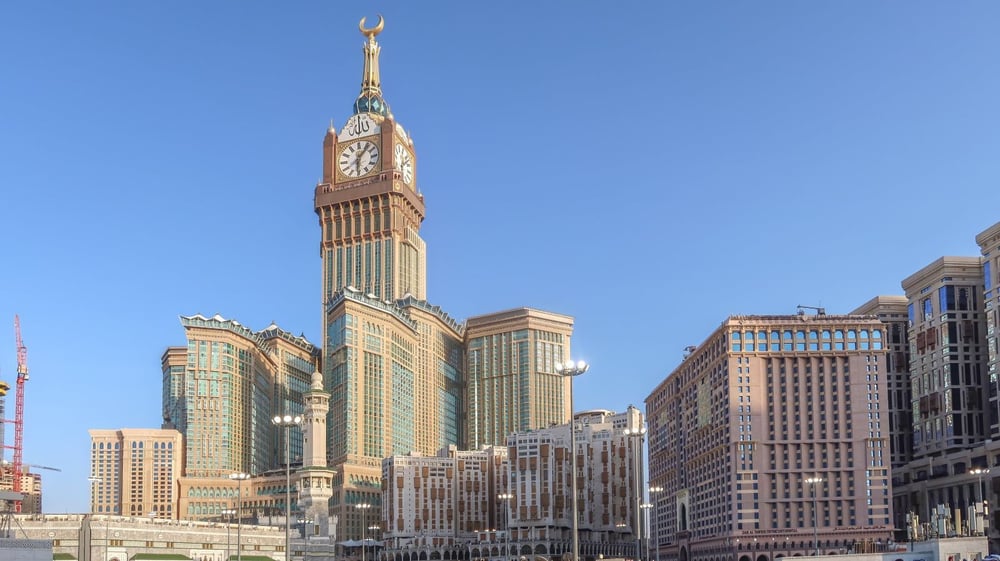
Rising above the skyline of Makkah Al-Mukarramah in western Saudi Arabia, the Makkah Clock Tower is one of the most recognisable architectural and engineering landmarks in the Islamic world. Located above the Abraj Al Bait complex within the Fairmont Hotel, it soars to a height exceeding 600 metres — making it both the tallest and largest clock tower in the world. Its first trial run began during Ramadan in the year 1431 AH, or 2009 AD, with the Makkah Time Centre synchronised to the Universal Coordinated Time (UTC) network headquartered in Paris.
A Dream Realised
The idea for the Makkah Clock Tower was launched under the direction of King Abdullah bin Abdulaziz. On 13 March 2008, Prince Khalid Al-Faisal, Governor of the Makkah Region, announced the project. Designed to crown the fifth tower of the King Abdulaziz Endowment, the clock tower was to rise approximately 601 metres above the city. Its proportions were intentionally grand — visible and audible from up to 13 kilometres away. Each façade is adorned with the word “Allah” in Arabic calligraphy, while a single clock face measures 43 metres in both height and width, cementing its status as a unique artistic and engineering masterpiece.
Also Read: Tourist Places in Saudi Arabia
Scale and Structure
The Makkah Clock Tower comprises four faces — one for each cardinal direction.
Main faces:
- One is positioned northwards towards the Grand Mosque and one is positioned southwards in the opposite direction.
- Each circular dial measures 43 metres in diameter, set within a rectangular facade approximately 80 metres tall and 65 metres wide.
- These faces are larger and more prominent, oriented towards the Grand Mosque and key city sightlines.
Side faces:
- Oriented eastwards and westwards.
- Each side clock has a circular dial measuring 25 metres in diameter, enclosed within a rectangular facade approximately 65 metres tall and 39 metres wide.
- While the tower’s overall height remains uniform, the smaller size of the side dials means their surrounding façades are proportionally more modest, ensuring a balanced and harmonious appearance from all angles.
The entire clock itself is mounted roughly 400 metres above ground, occupying a dedicated section of the tower designed to showcase the monumental timepieces. Above the clocks, the structure continues to rise, culminating in the towering spire and the iconic golden crescent. Together they form a monumental visual and functional feature of the tower and makes it the tallest of its kind in the world. Manufactured in Germany by leading global experts, it combines precision engineering with monumental design.
Also Read: Modern Construction Techniques in Saudi Arabia
A Fusion of Innovation and Symbolism
Designed to offer more than just timekeeping, it plays both symbolic and functional roles. During Islamic occasions — such as the start of a new Hijri month or Eid — its exterior walls emit light beams and patterns. At the call to prayer, 16 vertical beams project skywards for more than 10 kilometres.
Loudspeakers installed above the clock broadcast the Grand Mosque’s adhan to surrounding areas up to seven kilometres away. During the adhan, the tower’s peak illuminates with 21,000 white and green lights, visible from a distance of 30 kilometres — which enhances awareness of prayer times, especially for those with hearing impairments.
The colours of the clock faces change according to the time of day: white faces with black hands in daylight, green faces with white hands at night. Above all stands a monumental crescent — 23 metres high and the largest in the world.
Also Read: Vision 2030 The Saudi of Tomorrow
Architecture and Interior Design
The top of the tower draws inspiration from the maritime design of ships, incorporating residential, operational and maintenance facilities. Six lifts carry visitors to the surrounding balcony, which encircles the clock with a five-metre-wide walkway. The tower is decorated with Islamic ornamentation inspired by Arab heritage, giving it a distinctive artistic character.
Developed by a German firm, the project involved 250 engineers and technicians. Seven tower cranes were deployed to position its massive components. The clock’s surface is clad in 98 million coloured glass mosaic tiles and illuminated by over two million LED lights.
Also Read: Saudi Design and British Heritage
Precision and Power
Each of the four faces is driven by an independent motor weighing more than 21 tonnes. These operate in perfect synchronisation through a highly accurate control system, anchored by five atomic clocks connecting it to Makkah time.
Power is supplied by both the public electricity grid and dedicated solar panels. The motors operate with a precision tolerance of just 0.01 millimetres, reducing friction and extending the mechanism’s lifespan.
Also Read: Sustainability in Saudi Arabia
Strength and Craftsmanship
The clock’s surface spans 430 square metres of advanced carbon fibre, ensuring resistance to extreme weather. The internal gears are crafted from a specialist bronze–steel alloy, engineered to withstand friction and pressure.
The space right above the clock bears the inscription “Allahu Akbar”, with the vertical stroke of the letter alif measuring 23 metres in height. Further up, the golden crescent crowning the clock stretches with a diameter of 23 metres.
Also Read: Traditional Crafts of Saudi Arabia
A Spiritual Timekeeper
The Makkah Clock Tower serves as a unifying time reference for the Islamic world. Its light signals at the call to prayer are particularly helpful for those at a distance or with hearing impairments, while its changing colours and illuminated patterns infuse a heightened spiritual atmosphere during major Islamic celebrations.
An extraordinary blend of tradition and modernity, the Makkah Clock Tower stands as both a global symbol of Islam and a triumph of human ingenuity. With its cutting-edge technology and distinctive design, it continues to draw millions of visitors each year — a timeless reminder of the enduring significance of Makkah Al-Mukarramah.
-jpg.jpeg)
-jpg.jpeg)