Published: 9 June 2026
As part of Saudi Arabia's wider commitment to Vision 2030 and its goal of raising the quality of life in the Kingdom's cities and establishing them as world-class, sustainability-driven destinations, four major programmes have been launched in the capital. The most significant of these is the Riyadh Green Programme, one of the most ambitious urban greening initiatives anywhere in the world, and a project that speaks directly to the kind of city Riyadh is determined to become.
With Riyadh's population continuing to grow at a considerable pace, the programme aims to increase the per capita share of green space across the city, expand tree cover and planting across all districts, and make considered use of available water resources in irrigation. The logic is straightforward but the implications are far-reaching: more trees and green cover mean lower temperatures, cleaner air, quieter streets, and a more liveable environment for everyone who calls the capital home. Together, these measures are designed to reduce temperatures, improve air quality, and create a more sustainable and vibrant way of life for the city's residents and visitors alike.
The programme's headline target is the planting of more than 7.5 million trees across every neighbourhood in Riyadh by 2030, drawing on 99 tree species selected for their compatibility with the city's desert environment. This will increase the proportion of green space within the city from 1.5 per cent to 9 per cent, and raise each resident's share of green space from 1.7 square metres to 28 square metres, an increase of sixteen times the current figure. To appreciate the scale of that shift, it is worth considering what it means in practice: a city in which parks, tree-lined streets, and planted corridors are woven into the everyday fabric of urban life, rather than occasional features of it.
Three Pillars of Delivery
The programme is structured around three distinct clusters of projects, each addressing a different dimension of the city's greening ambition.
City-Wide Greening Projects encompass 43 major parks, a primary road network spanning 1,205 kilometres, and 148 square kilometres of wadis and tributaries, bringing natural landscape features into the heart of the urban environment.
Neighbourhood Greening Projects bring the programme directly into the daily lives of residents, covering 120 residential districts and including 3,331 neighbourhood parks, 4,500 mosques, 5,939 schools, 387 healthcare facilities, 1,665 government complexes, and 2,000 car park sites. The inclusion of schools, mosques, and healthcare facilities is particularly significant: it signals an intention to embed green space not just in leisure destinations, but in the places where people spend the most time.
Infrastructure Projects form the operational backbone of the programme, and include advanced training centres and laboratories, the development of agricultural nurseries with a production capacity exceeding three million seedlings annually, a 1,350-kilometre water network, and an increase in the use of treated water for irrigation from 11 per cent to 100 per cent. A seed bank will also be established, and the water network's capacity will be expanded to 1.7 million cubic metres per day. Legislative development and community initiatives will further support the programme's planting operations, ensuring that the changes being made to the city's landscape are sustained over the long term.
Key Parks and Green Spaces
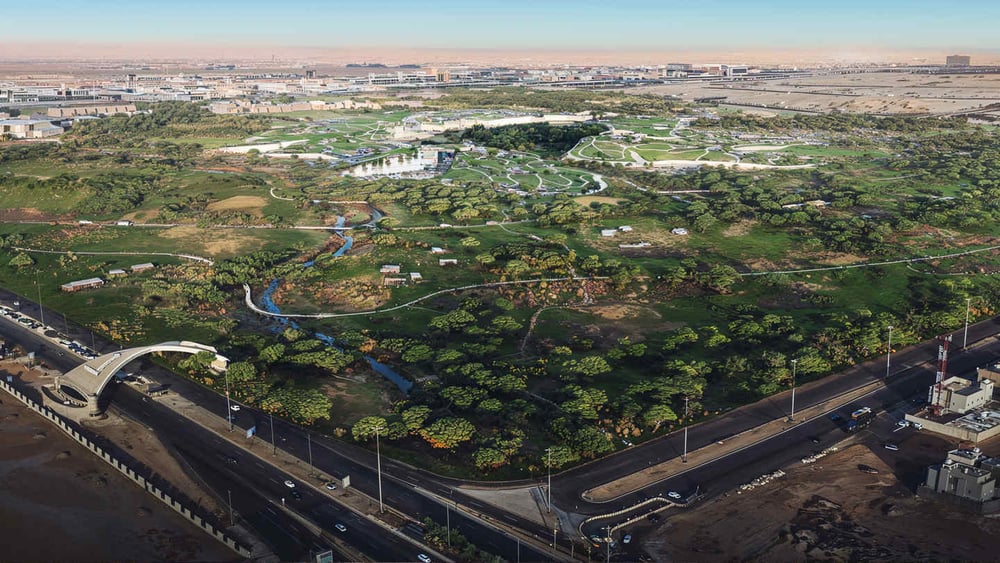
Several landmark parks sit at the heart of the programme's vision for the capital. King Abdulaziz Park extends across 4.3 million square metres in the north of Riyadh, making it one of the largest parks in the capital and a centrepiece of the city's green ambitions. Alongside it, the programme encompasses Al Rimal Park, Al Munsiyah Park, Al Qadisiyah Park, and Dhahrat Namar Park, each contributing to the green corridor being woven through the city's urban fabric and offering residents new spaces for leisure, recreation, and respite from the urban environment.
What the Programme Will Deliver
The Riyadh Green Programme has set out a clear and measurable set of outcomes. It will increase oxygen levels whilst reducing carbon dioxide concentrations by between three and six per cent. Air temperature across the city is projected to fall by two degrees Celsius, and energy consumption is expected to decrease by 650 gigawatt-hours per year, a reduction with meaningful implications for household costs and the city's overall carbon footprint. The programme will also enhance the city's aesthetic character, improve quality of life indicators, and increase Riyadh's capacity to absorb rainfall and mitigate flooding. In doing so, it directly advances several of Vision 2030's environmental sustainability and community development objectives, whilst opening new investment opportunities to the private sector.
A Statement of National Intent
The Riyadh Green Programme is more than an environmental initiative; it is a reflection of Saudi Arabia's broader direction of travel under Vision 2030 and a commitment to building a future that is more sustainable, more economically diverse, and more attuned to the long-term wellbeing of its people. Cities that invest in green infrastructure attract talent, retain residents, and signal to the world that they are serious about the future. By transforming Riyadh's landscape, the programme is also transforming its identity, making the capital, alongside other Saudi cities, an increasingly compelling destination for residents, tourists, businesses, and investors from around the world.
-jpg.jpeg)
-jpg.jpeg)