Published: 25 November 2024
Hijazi architecture stands as one of the most distinctive heritage arts of Saudi Arabia, embodying the antiquity, authenticity and artistry of the Hijazi community. Among its most notable features are the rawasheen and mashrabiyas — ornate wooden lattice windows and balconies that have become enduring symbols of this architectural tradition. These intricate wooden structures embellish the façades of old homes, showcasing the craftsmanship and creative flair of artisans from centuries past.
Today, these elements continue to serve as a source of inspiration for designs that seamlessly blend traditional Hijazi heritage with contemporary elegance.
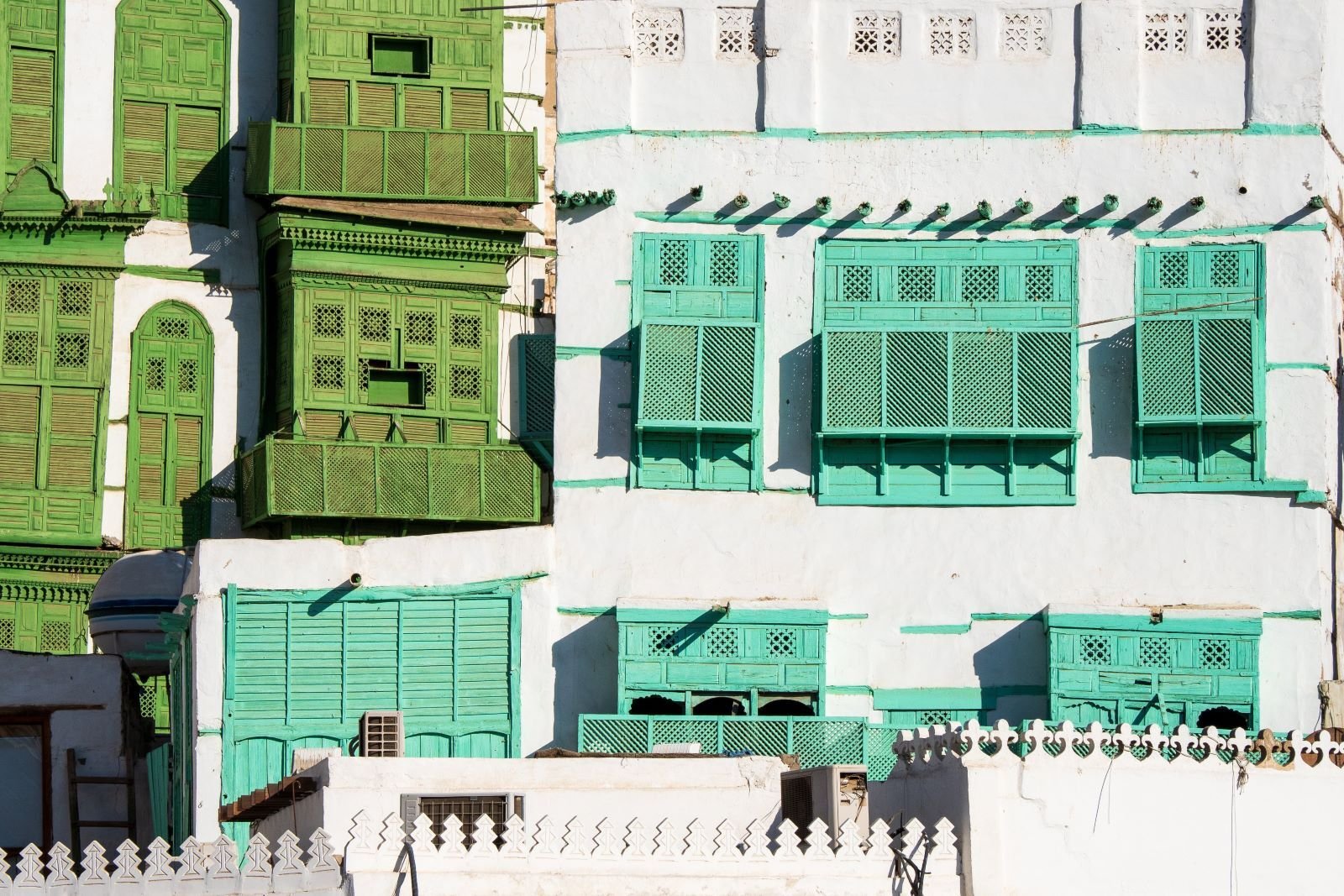
Rawasheen of Historic Jeddah
In Jeddah’s historic enclaves, the beating heart of Hijazi heritage, many rawasheen (plural for rawshan) rise as defining features of the cityscape. Their elaborate presence once adorned entire neighbourhoods, enriching the urban fabric with a blend of cultural pride and architectural richness.
Although many of these traditional rawasheen have disappeared with time, efforts are under way to preserve them. Some of the most notable initiatives include:
- Redesigning rawasheen as decorative pieces and souvenirs that honour their legacy.
- Incorporating modern techniques, such as laser carving, to create three-dimensional models inspired by traditional forms.
Between Tradition and Modernity
The mashrabiyas — intricately carved wooden screens that formed part of the rawasheen — once served a practical function of cooling water and shading interiors, while also adding decorative finesse. Today, they are reimagined within contemporary interiors.
The Old Hijazi Home
The traditional Hijazi home reflects a distinctive architectural identity shaped by geography, climate and deep-rooted Islamic culture. Situated on the Red Sea, Jeddah served for centuries as a vital port linking three continents, and this cosmopolitan role is embedded in the Hijazi architectural character.
Building materials were as unique as the style itself:
- Red stone sourced from Al-Shumaisi near Madinah.
- Finely crafted wood, employed for rawasheen and mashrabiyas, which elevated façades with elegance.
The interior layout of the Hijazi House revealed both practicality and refinement:
- The dihliz: a grand entrance hall that welcomed guests, often lined with sand or adorned with plush carpets in wealthier households.
- Bedrooms: located on the upper floor and connected by graceful wooden staircases.
- Arches and engravings: decorated the houses so that they appeared as artistic masterpieces combining beauty with practical function.
Rawasheen: The Essence of Hijazi Art
The rawshan is a projecting wooden window that defined the aesthetic of old Hijazi dwellings. Carved from premium timber and decorated with complex, geometric arabesque patterns, these structures offered a delicate balance of privacy, ventilation and light. Residents could observe street life outside without being seen themselves — a subtle interplay of openness and seclusion.
Their functions were as practical as they were artistic:
- Enhancing natural ventilation and cooling.
- Acting as thermal shields against Jeddah’s harsh sun.
- Preserving privacy while framing the outside world.
The Artistic Significance of Rawasheen
Deeply rooted in Islamic art, the rawasheen form part of the arabesque tradition, with interwoven geometric patterns and ornate detailing. While this craft is at risk of extinction, revival efforts continue through décor, heritage-inspired souvenirs and architectural reinterpretation.
Types of Rawasheen
No two rawasheen are identical; their size, shape and colour reflected both the aesthetic taste and social standing of their owners. Broadly, they fall into four categories:
- Lower Rawshan – positioned at ground level, extending outward with protective iron bars.
- Independent Rawshan – designed for each room separately, detached from adjoining rawasheen.
- Connected Rawshan – adjoining neighbouring rawasheen either vertically or horizontally, often embellished with interlaced arabesque decorations.
- Composite Rawshan – incorporating the mashrabiya, traditionally used for cooling water and housing plants.
Crafting the Rawshan
Each rawshan was an ensemble of fine architectural details:
- Crown (Taj al-Rawshan): an upper portion projecting outward to drain water, usually decorated with engravings and ornaments.
- Upper band: a horizontal panel with cutwork patterns allowing filtered light.
- Movable shutters: divided between fixed upper panels and adjustable lower ones for flexibility in airflow.
- Shish screens: delicate wooden grilles covering the lower openings to preserve privacy while adding aesthetics.
The Contemporary Revival
Modern heritage-inspired products echo the spirit of the rawasheen, now crafted with:
- Durable hardwoods combined with advanced techniques.
- Customisable designs, with personalised engravings or inscriptions.
- A wide variety of colours and forms, bridging tradition with modern décor.
A Living Legacy
The rawshan endures as a symbol of Hijazi identity and refined artistic taste, an architectural jewel that stands as a witness to human genius that harmonises beauty and function. It remains a silent representation of the ingenuity of its makers, a dialogue between heritage and modernity, and a reminder that even as urban landscapes evolve, the rawasheen and mashrabiyas will forever be etched into the memory of Islamic architecture.
-jpg.jpeg)
-jpg.jpeg)