Published: 5 February 2026
Jeddah is one of Saudi Arabia’s most important economic and urban centres and the Kingdom’s principal port on the Red Sea. Historically regarded as a commercial, investment and tourism gateway, the city’s real estate market has entered a period of measured transformation in recent years. This evolution has been driven by large-scale development activity, sustained population growth and targeted infrastructure investment aligned with Vision 2030, including major urban regeneration and transport initiatives.
A key milestone has been the launch of the Jeddah Central Project in 2021, led by Jeddah Central Development Company (JCDC), a SAR 75 billion mixed-use regeneration scheme aimed at repositioning the city’s urban core and waterfront. This has been accompanied by renewed momentum in strategic transport infrastructure, alongside the continued expansion of King Abdulaziz International Airport, which is being upgraded to accommodate up to 114 million passengers annually by 2030.
Against this backdrop, Jeddah is consolidating its position as one of the Kingdom’s more resilient real estate markets. Rather than rapid price acceleration, current conditions suggest a market adjusting to greater supply visibility, increasingly selective demand and a widening divergence between prime and mid-market segments, consistent with a maturing and more differentiated investment landscape.
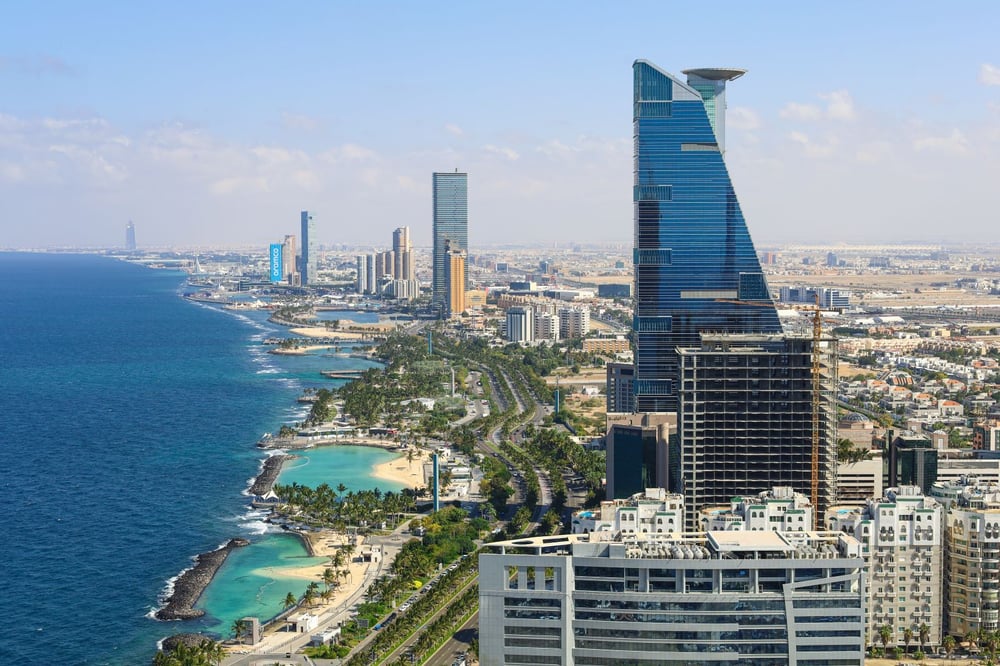
Overview of Jeddah’s Real Estate Market
Spanning residential, commercial, hospitality and tourism assets, Jeddah’s real estate sector remains a central pillar of the city’s economy, supported by a growing pipeline of mixed-use developments. Its proximity to the Holy Cities, combined with a diversified economic base and an established logistics role on the Red Sea, continues to sustain demand across a broad range of property segments.
Transaction activity has gathered steady momentum in recent years. During the first half of 2025, residential transaction volumes increased by 19% year on year, driven primarily by apartment-led demand, alongside continued expansion in commercial and tourism-led development. In parallel, government-backed housing programmes, quality-of-life initiatives and large-scale waterfront regeneration have played a meaningful role in boosting market confidence and supporting Jeddah’s longer-term investment appeal.
Key Drivers of Market Growth
Growth across Jeddah’s real estate market continues to be shaped by a combination of demographic, structural, and policy-led factors, each supporting the demand across different segments of the city.
Population Growth and Urban Expansion
Jeddah’s population growth forms the baseline for housing demand, specifically among younger professionals and expanding households. Demand remains largely focused on practical, mid-sized apartments, which in turn reflects both affordability considerations and increasing household preferences. Factors such as ongoing urban expansion, particularly toward the north and east of the city, have further supported residential development in newly emerging districts.
Vision 2030
While Vision 2030 remains a central long-term driver, Jeddah’s real estate market has moved beyond announcement-led optimism into a more delivery-focused phase. Major initiatives, including waterfront regeneration, the revitalisation of Historic Jeddah and the development of large-scale leisure and tourism destinations, are progressing from planning into execution. This shift has improved visibility across development pipelines and has begun to translate into more tangible changes in investment behaviour and end-user demand.
Alongside this, Jeddah has a growing calendar of cultural venues, events and entertainment infrastructure which is strengthening the city’s tourism proposition and supporting sustained demand across hospitality, retail and residential segments.
Infrastructure Development
Sustained public investment has been directed towards road upgrades, public transport networks, municipal services, stormwater drainage systems and traffic congestion solutions. These improvements have enhanced connectivity and liveability across several districts, contributing to rising land and property values in areas benefiting from upgraded infrastructure and broader urban modernisation.
Economic Diversification
Jeddah’s economic base has continued to broaden beyond its traditional trading roles to include tourism, entertainment, logistics, light industry and technology-led activity. This diversification has generated new demand for modern office space, retail centres, warehousing and logistics facilities, supporting additional real estate demand.
Key Investment Areas in Jeddah
North Jeddah
Northern Jeddah has emerged as one of the city’s most dynamic and sought-after investment corridors. Districts such as Obhur Al Shamaliah, Al Mohammadiyah, Al Naim and Al Zahraa continue to attract sustained interest, driven by proximity to the waterfront, modern infrastructure and a concentration of higher-quality residential development. These areas have increasingly appealed to both end-users and long-term investors, where price performance has been more resilient and demand absorbed with greater consistency.
Waterfront and Corniche
The Corniche and broader waterfront districts remain central to Jeddah’s premium residential and hospitality narrative. Demand continues to be driven by luxury apartments, branded residential offerings, hotels, and a growing ecosystem of restaurants and cafés. Ongoing redevelopment has reshaped the Red Sea coastline into a more integrated leisure and lifestyle destination, reinforcing the area’s appeal to both domestic buyers and tourism-led investment.
Central Jeddah and Historic Jeddah
Central Jeddah, and in particular the Historic Jeddah district, presents a differentiated investment proposition centred on culture, heritage and tourism. Major revitalisation initiatives have repositioned the area as a focal point for hospitality-led development, with opportunities spanning heritage hotels, traditional dining concepts, cultural venues and curated retail. As regeneration progresses, the district is increasingly being framed as a globally recognisable cultural destination with long-term tourism potential.
East Jeddah
Eastern Jeddah continues to offer a more value-oriented investment profile, supported by comparatively lower land prices and improving infrastructure. These districts are well-suited to mid-market and affordable housing schemes, alongside educational, healthcare and service-led developments. For investors prioritising income stability and longer-term yield visibility, East Jeddah remains an important counterbalance to the city’s higher-priced northern and coastal markets.
Key Real Estate Investment Opportunities
Residential Sector
Medium-sized apartments continue to represent one of the most active investment segments in Jeddah’s residential market, particularly among young professionals, newly formed households and specialist expatriate population. Integrated residential communities, notably within northern growth corridors, are gaining traction as buyers increasingly prioritise access to amenities, services, and employment centres. Demand is also building at the premium end of the market, with luxury and branded residential schemes in northern and waterfront districts attracting interest from both domestic and internationally mobile buyers.
Hospitality and Tourism Assets
The expansion of domestic and international tourism continues to create attractive opportunities across hotels, serviced apartments and resort-style developments, especially along the coastline and in central districts.
Historic Jeddah has emerged as a distinct hospitality submarket, supported by large-scale regeneration initiatives aimed at elevating the district’s profile as a cultural and tourism destination. Heritage-led accommodation, combining adaptive reuse with modern hospitality standards, stands out as a high-value niche within the broader tourism investment landscape. The physical constraints of the UNESCO-protected Historic Jeddah district create inherent scarcity, while demand is increasingly driven by higher-spending travellers seeking culturally immersive hospitality experiences.
Commercial and Office Space
Demand for high-quality office space is strengthening as Jeddah’s economic base remains on track to diversify. The market continues to be characterised by limited availability of Grade A stock, supporting rental performance and absorption in well-located developments. New supply is largely concentrated within integrated urban schemes in northern districts and along key arterial routes, aligning office demand with broader lifestyle, retail and residential offerings rather than the stand-alone commercial clusters.
Mixed-Use Developments
Projects that combine residential, retail and leisure components are among the most prominent development trends. They reflect a wider shift towards integrated, live-work-play environments. Such hybrid projects attract sustained investor interest, offering diversified income streams and greater resilience across market cycles.
Market Outlook to 2030
Market indicators point to persistent, structurally supported growth across Jeddah’s real estate sector over the remainder of the decade. Large-scale development activity, sustained housing demand and the expansion of tourism and entertainment are expected to remain the primary drivers. Northern Jeddah and waterfront districts are likely to outperform the wider market, supported by higher-quality supply and ongoing redevelopment, while eastern areas will continue to play a central role in meeting mid-market and affordable housing needs.
Continued investment in public transport infrastructure, airport expansion and port development is set to reinforce Jeddah’s role as a regional logistics and commercial hub. This, in turn, is expected to support demand for commercial real estate, warehousing and industrial assets, underpinning a more diversified and resilient property market through to 2030.
-jpg.jpeg)