Published: 9 June 2026
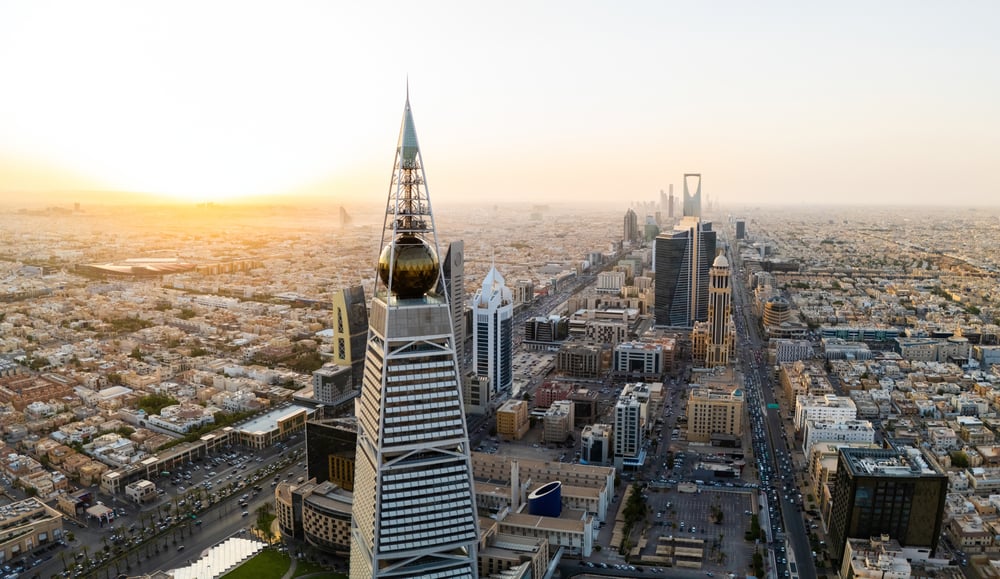
As Riyadh continues to expand at a remarkable pace, its growing population density and rising temperatures have made the phenomenon of urban heat islands, whereby dense city environments trap and amplify heat, one of the capital's most pressing climatic and environmental challenges. The effect is well understood: cities absorb solar radiation through their roads, rooftops, and building facades, retain it long after sunset, and release it slowly, creating a persistent thermal burden that conventional air conditioning alone cannot adequately address.
Guided by Vision 2030's commitment to improving quality of life and advancing sustainability, Saudi Arabia is preparing to launch an ambitious environmental project that will cool Riyadh's streets and bring temperatures to levels more conducive to the rhythms of daily life for the capital's residents.
A City with Sustainability at Its Core
The project sets out to reduce surface temperatures across asphalt, rooftops, buildings, and public infrastructure by between eight and fifteen degrees Celsius, a target that, if achieved, would represent a transformative shift in the lived experience of the city. Alongside extensive tree-planting campaigns, it also encompasses a broader replanning and restructuring of the city itself, covering road layouts, building facades, and public spaces. The strategy involves expanding green cover, increasing the number of water features, deploying innovative construction materials that support sustainability goals, and adopting urban planning approaches specifically designed to encourage lower ambient temperatures.
The initiative calls for a fundamental rethinking of how the city is designed and built, from the reflectivity of the surfaces underfoot to the orientation of streets and the placement of shade structures. Each of these elements, in isolation, offers a modest reduction in temperature; deployed together across an entire urban landscape, their cumulative effect is considerable. The project reflects a growing international understanding that the solution to urban overheating lies not in any single intervention but in the layering of many complementary ones.
A Vision for a Cooler, Greener Capital
The Royal Commission for Riyadh City has appointed Greek consultancy Planet as the project's lead adviser, bringing international expertise in urban climate strategy to bear on one of the most climatically challenging cities in the world. The plan calls for five pilot zones across the capital to be selected and assessed before the initiative is rolled out on a wider scale, allowing lessons to be learned and approaches refined before full implementation begins.
The Riyadh Cooling Project represents a strategic initiative launched by the Royal Commission under the umbrella of the Riyadh Green Programme, with the aim of developing a comprehensive strategy to address the urban heat island effect and reduce its impact on both residents and the environment. It is considered one of the largest urban cooling projects of its kind anywhere in the world, and its ambitions place Riyadh in the company of cities such as Singapore, Melbourne, and Athens, which have been pioneering similar approaches to urban climate adaptation over recent years.
The project draws on a suite of technologies and interventions designed to lower temperatures across the capital's streets and neighbourhoods. These include improvements to urban design, the use of construction materials that are more energy-efficient and less environmentally harmful, an expansion of green spaces, support for tree-planting initiatives, and the promotion of natural ventilation techniques and design principles. Cool pavements, which use light-reflective surfaces to reduce heat absorption, form another component of the approach, as do shaded pedestrian corridors that make walking a more viable and pleasant option even during the hotter months.
Understanding the Challenge
Recent climate studies have highlighted that Riyadh's urban areas record significantly higher temperatures than the surrounding landscape, a direct consequence of rapid development and the widespread use of asphalt and concrete surfaces that absorb and retain heat for extended periods. The contrast between the city's dense inner districts and its peripheral areas can, at peak summer temperatures, be striking: the urban core traps heat in ways that the open desert simply does not, creating pockets of concentrated warmth that persist well into the night.
This represents a considerable challenge on multiple fronts. Elevated temperatures drive higher energy consumption as residents and businesses turn to air conditioning to compensate, increasing cooling costs across the city and placing strain on the electricity grid during peak demand periods. There are equally well-documented consequences for public health: prolonged exposure to extreme heat is associated with heat exhaustion, cardiovascular stress, and reduced outdoor activity, all of which carry long-term implications for the wellbeing of the population. Addressing the heat island effect is therefore not merely an environmental ambition; it is a public health and economic imperative.
The Riyadh Green Programme, under which this cooling initiative sits, already encompasses a commitment to planting seven and a half million trees across the capital as part of Saudi Arabia's broader Saudi Green Initiative. The cooling project builds directly on this foundation, integrating thermal management into what is already one of the most significant urban greening programmes in the Middle East.
A Blueprint for the Desert City of the Future
This project forms part of the wider portfolio of landmark initiatives through which Vision 2030 is pursuing urban sustainability and responding to the pressures of climate change. Its significance, however, extends beyond the borders of the Kingdom. Riyadh's experience, the challenges it faces and the solutions it is developing, is directly relevant to a growing number of rapidly urbanising cities in hot, arid climates across the Middle East, North Africa, and beyond. If the project delivers on its ambitions, it will offer a replicable model that other cities in the region can adapt and apply.
Reshaping Riyadh's architectural identity and bringing its temperatures down will have a tangible, positive effect on the city's standing as a global destination for living, business, and investment. A capital that is more comfortable to inhabit, more walkable, and more visibly committed to the long-term wellbeing of its residents is one that will naturally attract the talent, tourism, and international interest that Vision 2030 is working to cultivate. In demonstrating that a desert city can take meaningful, systemic action against the pressures of its own climate, Riyadh has the opportunity to set a new standard, not just for the region, but for the world.
-jpg.jpeg)
-jpg.jpeg)