Published: 10 July 2026
Saudi Arabia's luxury real estate narrative has, for years, belonged to two cities. Riyadh tells the story of capital-driven growth. Jeddah tells the story of Red Sea waterfront living and hospitality. Now a third narrative is taking shape along the Gulf coast, in Khobar and Dammam, where the Eastern Province is beginning to define its own position around branded residences, mixed-use coastal towers and large-scale waterfront masterplanning.
It would be premature to call Khobar and Dammam skyline markets in the way Riyadh or Jeddah have become. Their vertical luxury segment remains selective, and much of the region's residential character is still rooted in villas and lower-density coastal compounds. But the signals building along the Corniche are credible, and they point towards a market moving from view-led real estate into something more layered: destination-led living, where the address is only one part of the proposition.
A Branded Entry Point: Retal Rise and Nobu Residences Al Khobar
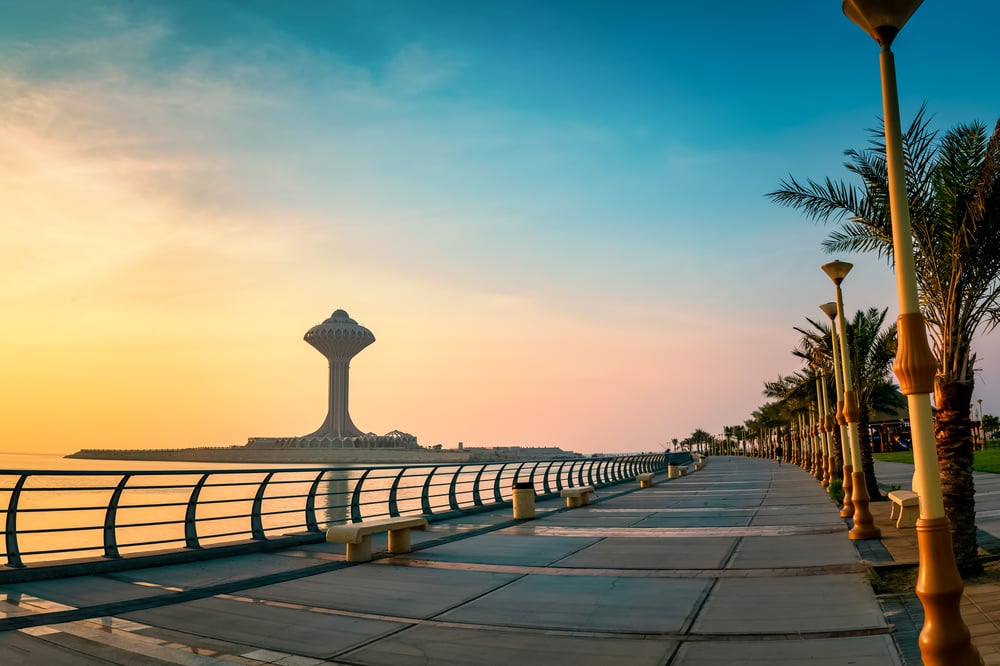
The clearest early signal sits within Al Nakheel, close to the new Al Khobar Corniche, where Retal Development has built two residential towers facing the Arabian Gulf. According to Retal, the first tower rises across 25 typical floors with 129 luxury apartments, while the second comprises 16 typical floors housing 62 apartments under the Nobu Residences brand, alongside a Nobu-branded hotel and restaurant on the same site.
The presence of a global hospitality name attached to a residential product is, in itself, the story. Branded residences do not simply sell square metreage; they sell a recognisable service standard, a design language and a hospitality pedigree that buyers can trust without needing years of local market history to reference. In an emerging premium market, that sort of signal carries more weight than it might in a mature one. It gives investors and end-users a reason to accept a new price tier and a new product type they have not seen locally before.
Rikaz Towers and the Shift Towards Urban Ecosystems
A second, more recent signal comes from Rikaz Towers, unveiled by London-based PLP Architecture at Cityscape Global. Positioned steps from the Corniche waterfront, the 63,780 sq m development pairs two towers, one holding 105 private apartments, the other combining 123 hotel rooms with 84 serviced residences, around shared podiums, shaded plazas and a public realm designed to activate street life throughout the day.
What Rikaz Towers demonstrates is not a single building but a small urban ecosystem: homes, hospitality, retail, dining and workspace layered together rather than delivered in isolation. This is the real pivot underway in the Eastern Province. Value is migrating away from the apartment or the tower alone and into the lifestyle infrastructure that surrounds it, from walkability and wellness to the everyday rhythm of a Gulf-facing waterfront district.
Dammam's Scale Play: New Dammam
If Khobar's story is being written project by project, Dammam's is being written at city scale. New Dammam, launched by Adel Real Estate Company in partnership with Alinma Capital, is positioned as an integrated coastal city built around housing, business, leisure and waterfront investment, in line with the Vision 2030 agenda for regional diversification.
The scale is substantial. The project represents a direct and indirect investment of SAR 98 billion (roughly USD 26 billion) across some 32 million square metres of reclaimed coastal land, and is expected to house more than 180,000 residents while generating over 80,000 jobs once complete. Its masterplan includes eight residential neighbourhoods, more than 15,700 housing plots, over 5,000 investment plots, 322 waterfront villas and more than 5 million square metres of canals and waterways.
Unlike Khobar's branded towers, New Dammam is not designed as an international tourism draw. It is closer in intent to the Kingdom's national housing programmes, aimed squarely at Eastern Province families and the region's established energy and industrial workforce. But its scale alone reframes what a Gulf coastline can support in this part of the country.
Reading the Signals Correctly
None of this should be mistaken for a finished market. The Eastern Province's premium coastal segment remains early-cycle rather than proven. What makes it worth tracking is the combination of factors converging at once: limited prime coastal land, a deep and affluent corporate base tied to the energy sector, growing branded residential differentiation, and a policy environment actively pushing regional diversification.
For tourism, the near-term opportunity is realistic rather than aspirational. Stronger hospitality, branded residences and waterfront dining are more likely to strengthen weekend, business and regional visitation than to trigger a mass-tourism shift in the short term. For investment, projects such as Retal Rise and Rikaz Towers may set early pricing references for the wider market, though their long-term performance will depend on delivery quality, service consistency and how well public spaces are activated once residents move in.
The Eastern Province is not yet competing with Riyadh's growth story or Jeddah's Red Sea narrative on scale. But Khobar and Dammam are assembling the components, branded living, hospitality integration and city-scale waterfront planning, of a market with its own identity. The early movers are the ones shaping what that identity will look like.
-jpg.jpeg)