Published: 16 December 2025
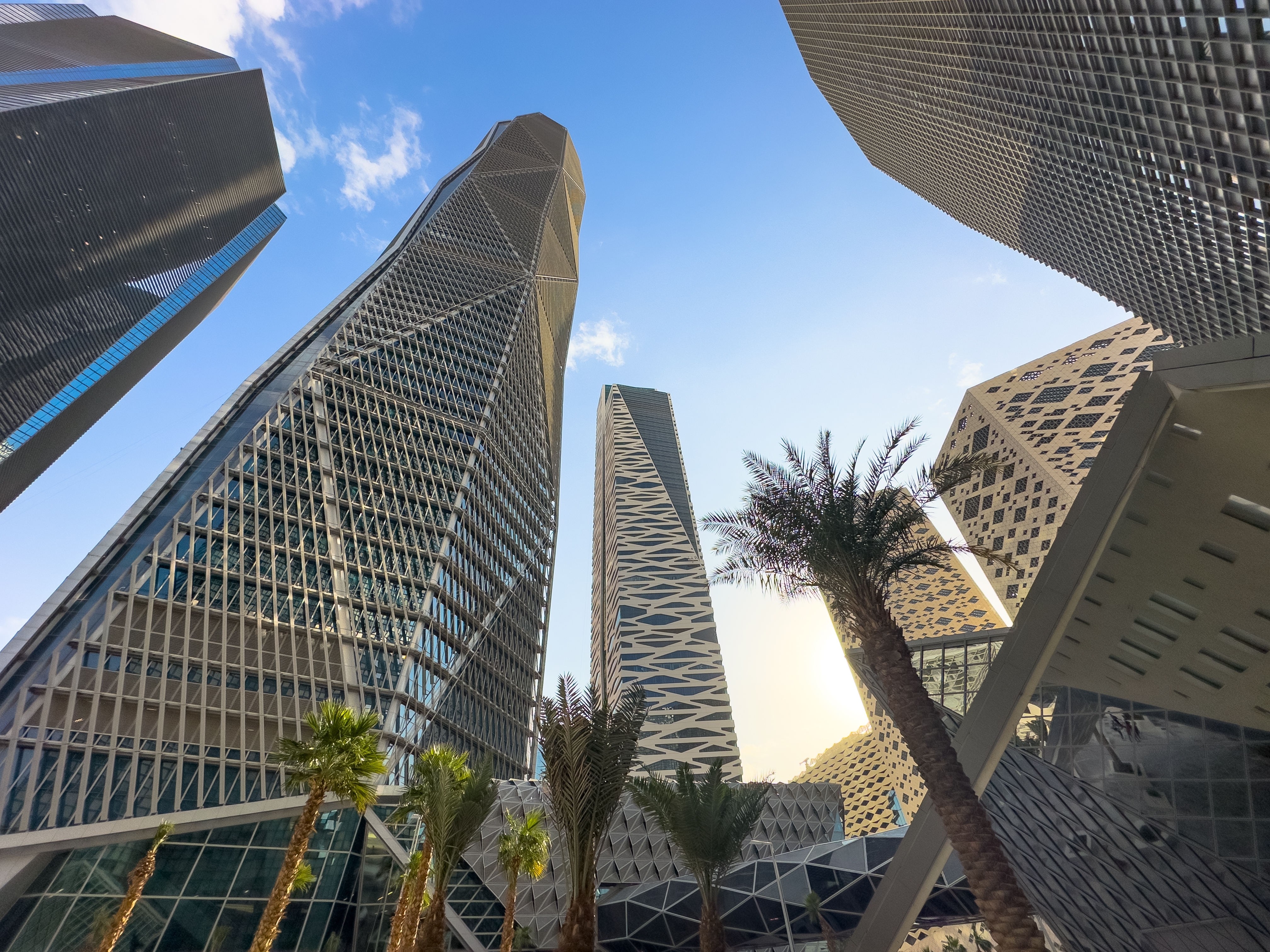
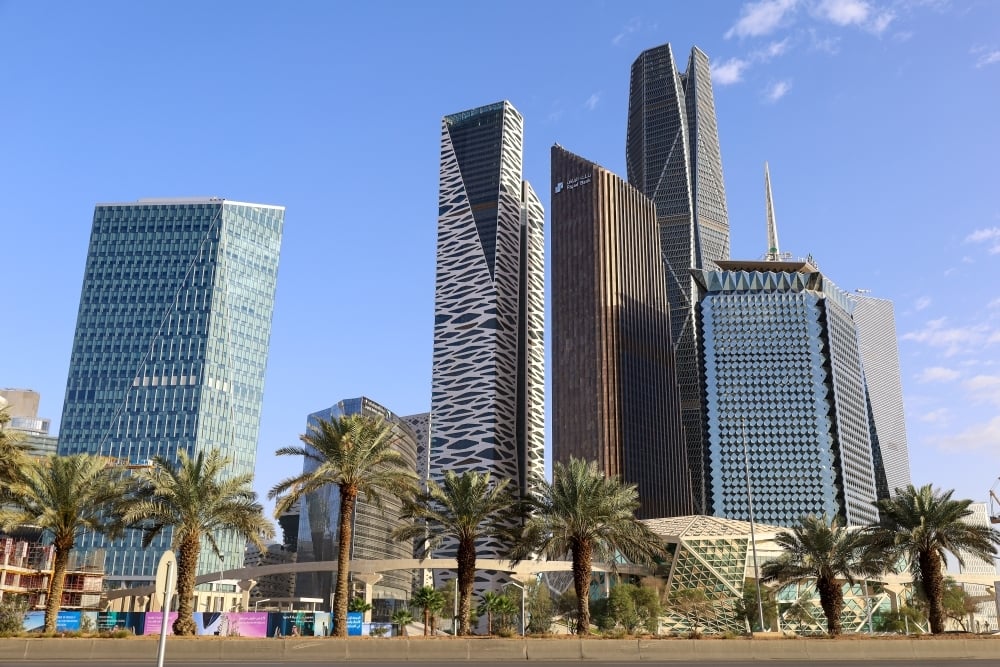
The pace of development in Saudi Arabia over the past decade has been nothing short of astonishing. Under Vision 2030 – the Kingdom’s long-term plan to diversify the economy beyond oil and elevate quality of life – more than $1.1 trillion has flowed into real estate and infrastructure, reshaping the country as we know it. This transformation carefully balances a deep respect for heritage with a radical embrace of future-focused design, from the restoration of Diriyah to the monumental ambition of NEOM’s The Line. The result is a design language that’s still very much in flux – experimental, climate-responsive, and increasingly centred on residential living. Below, we explore four of the most defining architectural trends shaping the Kingdom today.
Sustainable, Climate-Responsive Design
As something of a latecomer to large-scale urban development, Saudi Arabia has a unique advantage: its developers can study what has worked – and, more importantly, what hasn’t – in other global cities. One of the strongest lessons here is the need for climate responsibility, building not only for today, but for a future in which extreme heat, water scarcity, and energy demand will shape how people live. This has led to a steadfast commitment to sustainable, climate-responsive architecture. Rather than retrofitting outdated systems, many of the Kingdom’s newest projects are embedding strict environmental principles from the outset, designing in harmony with the landscape.
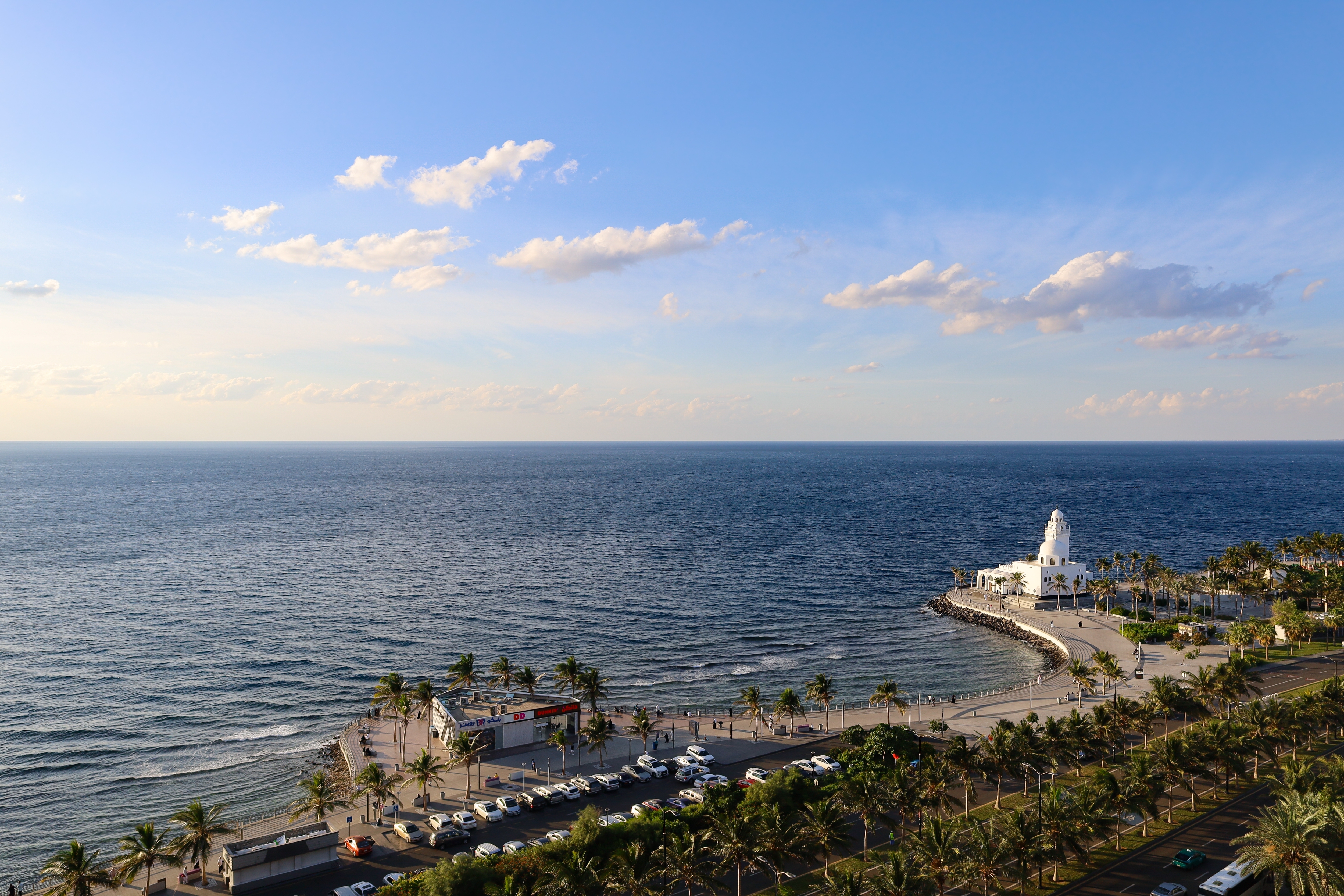
Nowhere is this shift more visible than along the Red Sea coast. Developed by Red Sea Global, this pristine white-sand archipelago has become a flagship for regenerative development – an approach that not only protects the land but actively supports and restores the local ecosystem. At Nujuma, a Ritz-Carlton Reserve, villas are powered by solar energy, constructed using modular components to minimise on-site disturbance, and finished with breathable natural materials that reflect heat. Nearby, the Four Seasons Resort at The Red Sea incorporates low-carbon concrete, deep-set façades, and generous overhangs to reduce solar heat gain – a vital adaptation in a region where summer temperatures routinely exceed 45°C.
Even the visual language is shaped by the landscape – from the seashell-inspired villas of the Four Seasons to the overwater pavilions of Nujuma, which appear to float above the reef. Rooflines echo dunes, while tones of sand, shell, and sea inform a material palette that blends beautifully into the terrain.
This ethos is extending into residential masterplans elsewhere on the mainland. Xeriscaping – the use of native, drought-tolerant flora – is replacing manicured lawns, while rooftop solar, greywater recycling, and low-VOC paints are becoming standard across communities developed by ROSHN.
Heritage-Rooted Modernism – Honouring The Past
One of the most powerful shifts in Saudi architecture today is a renewed embrace of heritage. While the pace of contemporary development is rapid, developers are increasingly careful not to erase the past but to honour and reinterpret it – drawing on traditional forms, materials, and spatial principles to create a design language that feels both modern and unmistakably Saudi. Leading this movement is the city of Diriyah, the birthplace of the First Saudi State and a focal point of the Kingdom’s cultural revival.
Under the stewardship of the Diriyah Gate Development Authority, entire residential neighbourhoods are being shaped to echo classic Najdi architecture, with earthy mudbrick façades, landscaped internal courtyards, and intricate geometric mashrabiya screens. These traditional references are paired with the comforts of contemporary living – from grand, light-filled interiors with smart home automation to private infinity pools set deep in the garden.
Some of the Kingdom’s most visually striking projects look even further back in time, drawing on the vernacular of the Nabataeans. In the Hijaz mountains, Desert Rock by Red Sea Global emerges almost imperceptibly from the cliffs, with suites and villas carved directly into the stone – mirroring the ancient tombs and dwellings once sculpted into the region’s escarpments. The architecture is deliberately understated, offering a contemporary tribute to a civilisation that mastered the art of crafting space from stone.
Wellness Woven Into The Architecture
As lifestyles shift in the Kingdom, so too does the way new homes are conceived. Across both resorts and private residences, wellness is becoming a central design principle – not in the abstract sense, but in spatial terms: light, landscape and layout. Floor plans are opening up, courtyards are becoming larger and more richly planted, and outdoor areas are being designed as genuine extensions of the home. Today, it’s not uncommon to find private villas with built-in hammams, state-of-the-art gyms, and biophilic gardens teeming with native flora.
Walkability and green pedestrian corridors are also being woven into master plans for the first time. In Riyadh’s Sedra community by ROSHN, for example, residential clusters are anchored by landscaped parks, shaded pathways, and community-centred public spaces – encouraging a slower, more sociable rhythm of daily life.
Integrated Urban Living and Microcities
If there’s one development that’s effectively the poster-project of new Saudi Arabia, it’s undoubtedly NEOM’s The Line – and rightly so. This first-of-its-kind indoor mega-city will eventually stretch 170km, entirely rethinking what year-round living in the heart of the desert can look like. At its core is a simple idea: everything you need should be within walking distance, including homes, schools, clinics, parks and workplaces.
While The Line remains years from full completion, its guiding principle is already taking shape across the country. A new generation of developments is moving away from the isolated villa model and towards a more connected and communal structure. These include projects like Warefa and Sedra in Riyadh, where homes are arranged around parks, schools, retail, and mosques, all linked by shaded pedestrian paths. The emphasis here is on reducing long car commutes, supporting daily life at a neighbourhood scale, and encouraging people to spend more time outdoors – and with one another.
Final thoughts – Get In Touch
Saudi Arabia Sotheby’s International Realty is proud to represent some of the Kingdom’s most exclusive and architecturally significant properties, from branded residences in the Red Sea to elegant apartments overlooking Masjid Al Haram in Mecca. To learn more, please contact us and an expert will get in touch.
-jpg.jpeg)
-jpg.jpeg)